A specialized kennel, in Mont-Tremblant.
Nine years, one breed, and one rule that has never changed: never more litters than we can follow dog by dog.
It started with a guardian dog, not a breeding program.
Neige came to us as a guardian for our goats, in the old Pyrenean tradition. Our veterinarian noticed, year after year, a rare temperament — protective without aggression, independent without being closed off, patient with every new animal on the property.
After two years of complete health screening and plenty of hesitation, we gave her a first litter. What struck us was how early a good guardian line shows itself — a puppy who observes before reacting, who never barks for nothing.
Nine years later, this is all we do. Litters are born in the house, grow up among our goats and our children, and discover snow before they discover the rest of the world.
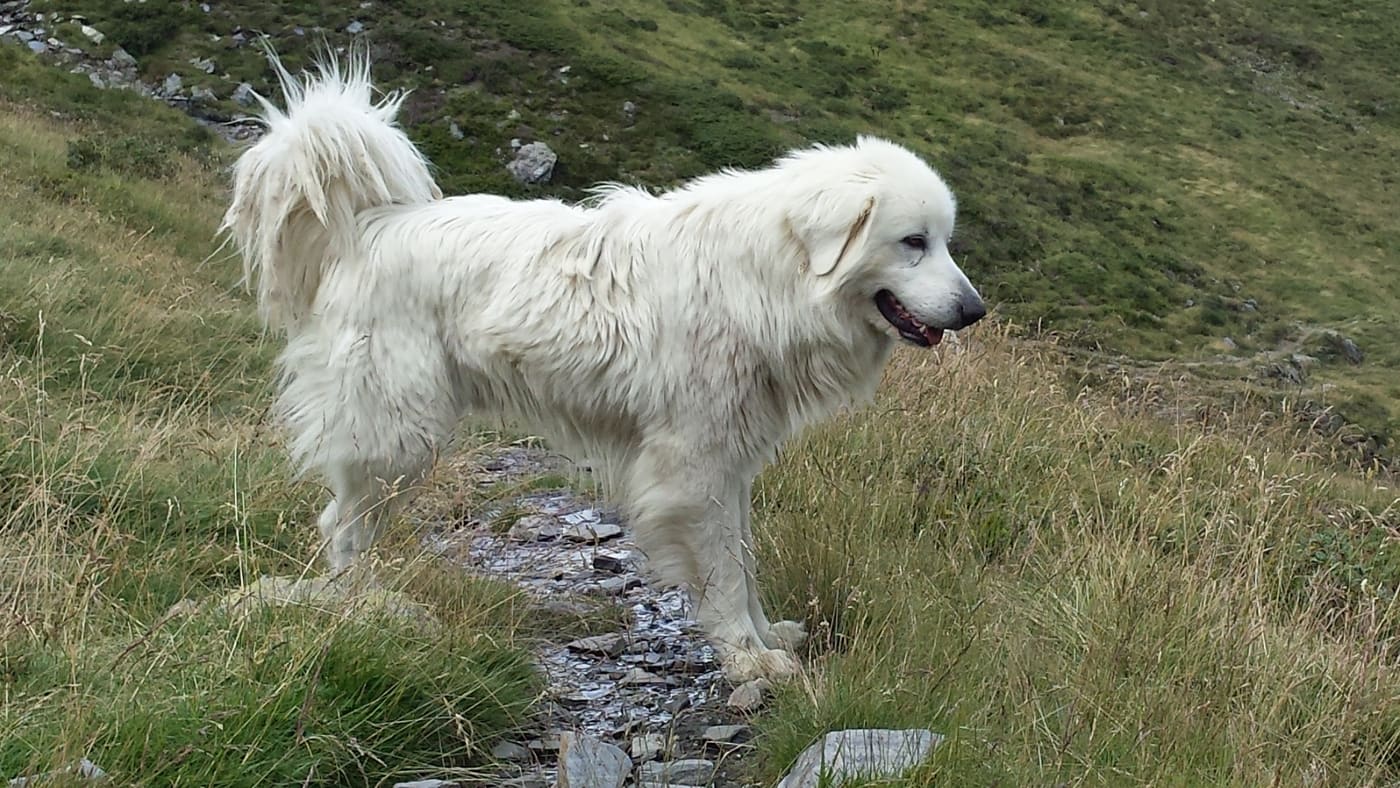
The Great Pyrenees, plainly explained.
A livestock guardian for centuries, not a miniature lap dog. Here's what you should know before adopting one.
A guardian's temperament
Calm, thoughtful, protective of their family. Unlike a herding dog that works to constant eye contact, the Great Pyrenees thinks for itself — which makes it a reliable guardian, and sometimes a stubborn student.
Worth knowing: they bark at night to signal a presence. It's a breed trait, not a training failure — close neighbours should know this going in.
A giant built for the cold
Males run 50 to 55 kg, females somewhat less. A thick white double coat, often marked with grey, badger or tan on the head. Built to sleep outside through a Laurentian winter — heat is far harder on them than cold.
Worth knowing: they blow their coat heavily twice a year. Budget for a vacuum, and a good undercoat brush.
Living with a Great Pyrenees
A patrolling instinct: they need securely fenced property, or they'll take it upon themselves to patrol the neighbourhood. Gentle with children and other animals, reserved with strangers.
Worth knowing: slow growth until age two or three — no long runs or excessive stairs before then.
A breed detail few people know: the Great Pyrenees is born with double dewclaws on the hind legs. That's a feature of the breed standard, not a defect — we don't remove them.
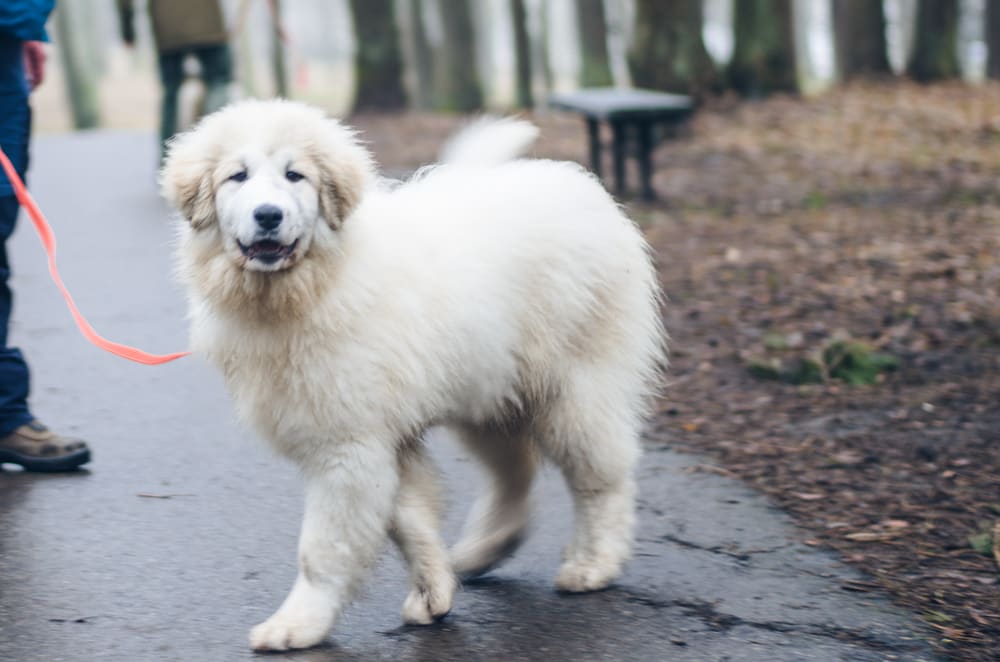
What we screen for, and what we guarantee.
No breeding happens until both parents have completed the screening recommended for the breed. Certificates are handed to you in person — not summarized, not "available on request".
Hips and elbows
X-rays evaluated by a recognized body — essential for a fast-growing giant breed.
Heart and eyes
Cardiac assessment (patent ductus arteriosus is known in the breed) and an annual ophthalmological exam.
Genetic panel
DNA testing for degenerative myelopathy and other known breed markers, so two carriers are never paired.
A two-year guarantee against serious hereditary conditions, provided in writing. Replacement or refund, your choice.
Come and see before you decide.
We welcome families by appointment, even without a firm plan. You'll see where the puppies are born, meet the parents, and get to ask the hard questions.
One piece of advice, even if you don't adopt from us: be wary of a breeder who offers to meet you in a parking lot or won't show you the mother. It's the most reliable signal there is.